Blog · September 9, 2026 · 7 min. · Build in Public
The Most Expensive Software Is the Kind Nobody Uses
A tradesman buys an expensive cost-estimation program – and never opens it. Why I see the same pattern in almost every project, and why I now start with the process instead of the tool.
TL;DR
- A tradesman bought an expensive cost-estimation program ten years ago and never opened it – meanwhile everything still runs on a paper calendar and Word.
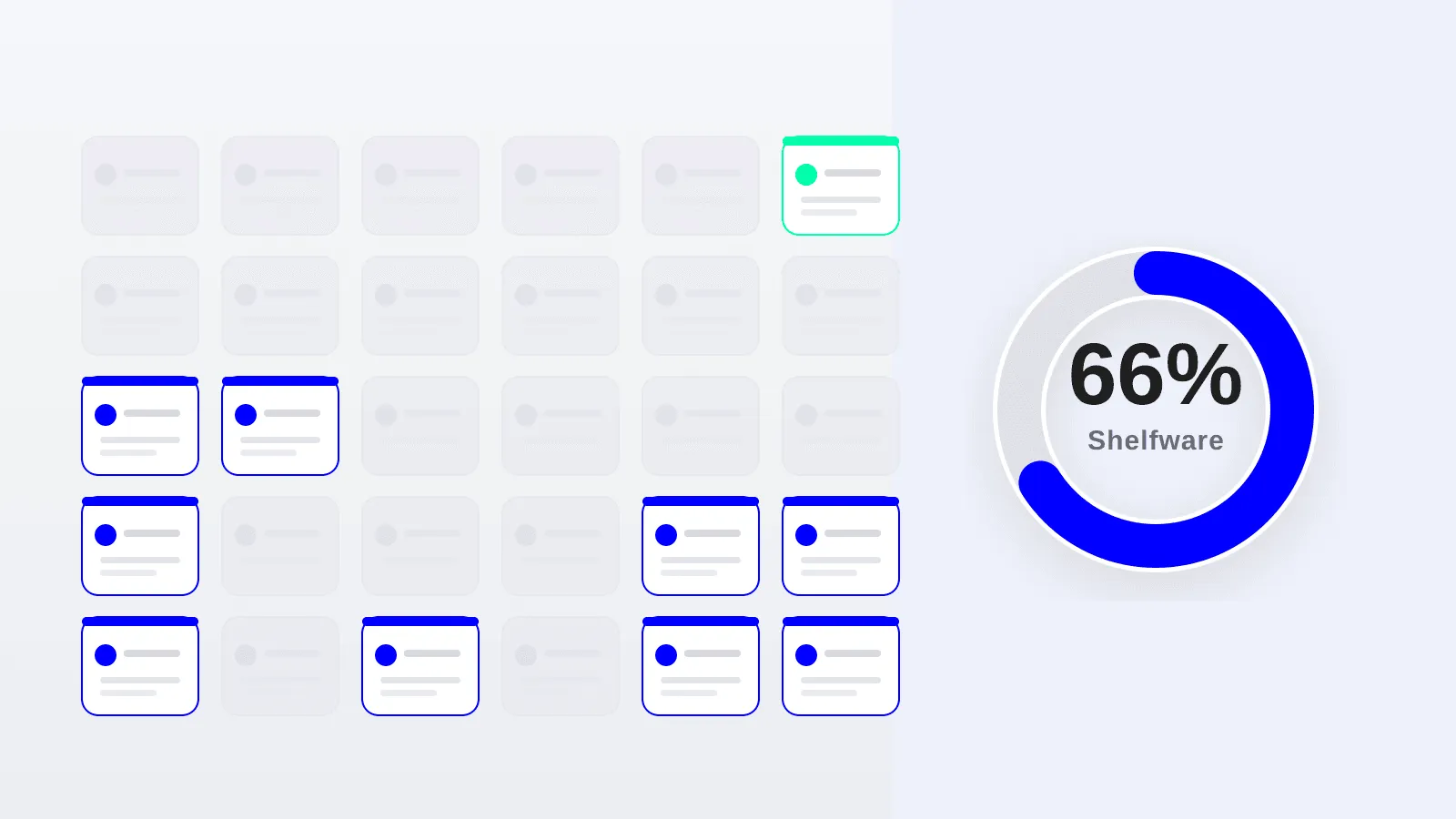
- I see the same pattern in almost every project: buying software is never the problem, actually using it is. Industry audits classify around 66% of all licences as shelfware or underused.
- That’s why I now start with the process, not the tool – and ask three questions before I recommend any software at all.
A program on a CD that never ran
I recently spoke with the owner of a skilled-trades business. About ten years ago he bought an expensive cost-estimation program. He never once opened it. No time to learn it. So the old routine kept running: a paper calendar and quotes written in Word.
The program has been gathering dust in the corner ever since – back then still on a CD. Paid for, never used. He told me almost apologetically, as if it were his personal failing. I see it differently. It’s one of the most honest images for a problem I run into in almost every business I work with.
Buying software is never the problem. Actually using it is.
I see this pattern everywhere
This isn’t a skilled-trades thing, and it isn’t a “those people just aren’t digital” thing. It runs through every industry and company size. And the numbers behind it are surprisingly brutal: a Vertice analysis of more than $30 billion in software spend classifies around 66% of all licences as shelfware or significantly underused. According to the 2025 SaaS Index by Zylo, organizations waste an average of $21 million a year on licences nobody uses.
The wild part: AI is accelerating this right now. At least buying software used to be a conscious decision – a quote, an approval, an invoice. Today a Claude or Copilot licence is paid for in two minutes. Buying is no longer the bottleneck; using it is. And without anyone thinking the processes through properly, the cool new tool becomes exactly the same shelfware as that CD back then. Just faster.
The full technical and business breakdown – with all the sources, a cost calculator and the path from “bought” to “used” – I wrote up over on the TAISC blog. Here I want to write about the personal part: what I’ve learned from it for my own work.
Why I start with the process, not the tool
I used to reflexively recommend a solution. “There’s a tool for that.” Today I deliberately hold back, because I’ve seen too often how that ends: a good tool gets dropped onto a broken process and just makes it more digital, not better. A few weeks later it sits idle, and the client concludes that AI or digitalisation “just doesn’t work for them”.
So I ask about the process first, not the tool. How does work actually happen – not how it looks on the org chart? Often the first win isn’t new software at all, but a tidied-up workflow. This way of thinking sharpened over many projects; I collected some of it in 15 projects, 15 lessons on AI readiness.
And I build differently. When I develop something, it should feel like it always belonged in the business – intuitive, adapted to the industry, no manual required. Nobody wants to contort themselves and build ten workarounds just to work with an off-the-shelf solution. What that looks like in practice I described using a custom app for a photo shop.
The three questions before I recommend any software
When someone asks me whether they should buy tool X, I don’t give a tool answer. I ask three questions:
- What exactly should it make easier day to day – and does someone feel that on day one? If the benefit only comes “sometime later”, people stay with the old way. Every time.
- Who rolls it out and stays responsible afterwards? Software without an owner becomes shelfware. “The login is in the email” is not a rollout.
- Does it fit the real process – or would everyone have to build workarounds around it? If the answer is “workarounds”, it’s usually not the tool that’s wrong, but the step before it that got skipped.
Three convincing answers, and the purchase is worth it. If one of them wobbles, the licence fee is the smaller problem – the lost time and frustration afterwards cost more.
What I do with it myself
I try to live what I preach. My own CRM, my financial data, my project stuff now hang as connectors directly off my AI tools – not because it’s cool, but because I use it daily and it measurably makes my day easier. That’s exactly the test: a tool I close again after two weeks is one I could have skipped.
For many, the most honest first step is therefore not “buy this”, but “let’s look at what you already have and how much of it is actually used”. Sometimes the best recommendation is to cancel a licence rather than buy a new one.
If you have tools in place that nobody touches – or you’re facing a purchase and don’t want to fall into the same trap: let’s have an informal chat. Preferably before the next CD ends up gathering dust in the corner.